
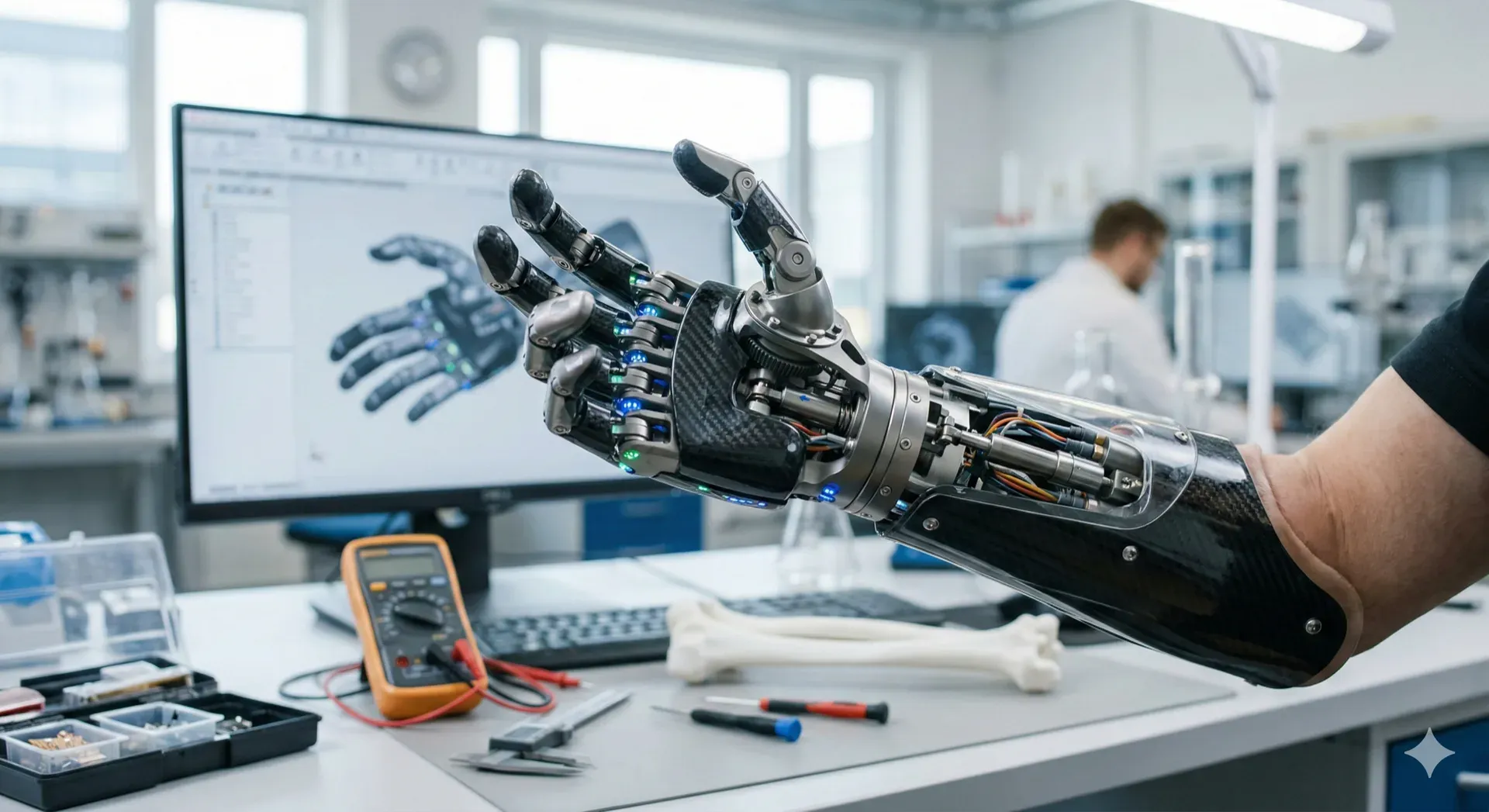
Optimizing the dynamics of biomedical devices with digital twins
The dynamics challenges in this sector.
The human body is a complex system that increasingly interacts with biomedical devices (prostheses, orthoses, exoskeletons, etc.). Quandyga combines its expertise in modeling the human body and electro-mechanical systems into a modeling approach adapted to all types of high value-added biomedical devices.
We develop dynamic, physics-based biomechanical models that are fully parameterized and highly customizable. Each model can be adapted to anatomical specificities, implant/prosthesis configurations, and the mechanical hypotheses being studied.
Custom Digital Twins
From imaging or clinical data, we build custom digital twins that allow you to:
Simulate joint behavior
Quantify internal forces and stresses
Automatically test different configurations
Analyze the impact of anatomical variations
Inform technical choices during the development phase
Validate, test, optimize the control of robotic, bionic devices ...
Key Benefits
Accelerated Development
- Numerical simulation of device behavior interacting with the human body and its specificities
- Rapid evaluation of biomechanical configurations
- Reduction of physical prototypes and human testing
- Shortened development cycles
- Early decision-making
Cost Reduction
- Fewer experimental trials thanks to simulation
- Fewer hardware iterations
- Anticipation of biomechanical constraints
Risk Management
- Quantification of loads on the body and the device
- Analysis of mechanical interactions with biological structures
- Identification of critical zones
- Reduction of fall, injury, relapse risks
Advanced Customization
- Parameterized models via numerical simulation
- Adaptability to anatomical variations
- Taking the biological environment into account
- Adjustment to R&D objectives
Simulation Examples
Discover our models applied to active walking analysis and the interaction with medical devices.
Simulation of walking with an active controller
Application of a walking simulator to virtually test an active knee prosthesis and optimize its control.
Human morphological variation
Application of a walking simulator to virtually test a wide range of human morphologies with a prosthesis.
Towards limitless biomechanics
Biomechanical simulation is not limited to prosthesis analysis. It paves the way for a new generation of solutions: surgical planning assistance, optimization of implantable devices, exoskeleton development, movement assistance systems, and advanced rehabilitation solutions.
Thanks to fully parameterized dynamic models, each configuration can be explored, adapted, and optimized. From the initial concept to functional validation, the analysis possibilities are vast.