
Mechanical complexity,
made simple.
Our approach
Understanding the motion of a mechanical system is often decisive in the success of an engineering project.
Whether it involves complex mechanical systems or industrial machinery, dynamic behavior directly influences their performance, durability, and safety.
Our job is to provide this understanding when stakes become critical, acting as a technical partner within your R&D projects.
Why choose us?
Mastery of the real
Our models are based on the laws of physics and the actual behavior of systems, going beyond a simple numerical approach.
Scientific approach
We seek to deeply understand phenomena, relying on a rigorous and analytical approach.
Collaborative support
We work closely with your teams, establishing a relationship of trust to support you throughout your projects.
Audacity and surpassing
Whether your system is simple or complex, we are drawn to technical challenges. Complexity stimulates our curiosity, but our approach adapts to your needs.
Multibody dynamics
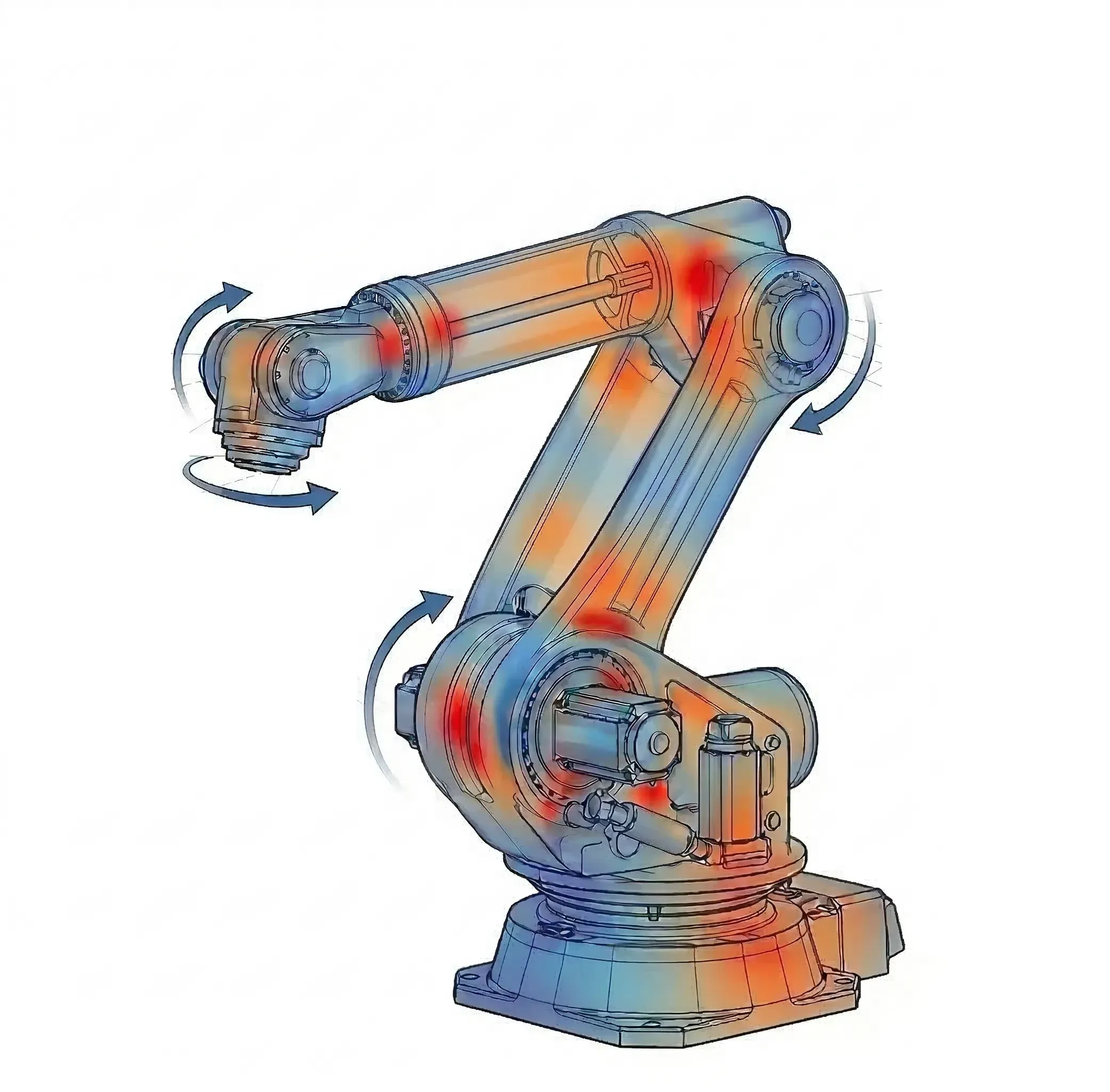
Multibody dynamics is used to model a mechanical system as a set of interacting bodies in order to analyze their motion, forces, and stresses.
Unlike a purely static approach, it takes into account the dynamic effects of Newtonian mechanics within the bodies and joints, integrating all interactions related to contacts, friction, actuation forces, etc., to understand and quantify the overall behavior of the system.
This method is particularly relevant when system operation depends heavily on motion: instabilities, vibrations, excessive force transmission, or harmful interactions with the environment. At Quandyga, we rely on this approach to develop actionable digital twins, supporting design and R&D decision-making.
Robotran software
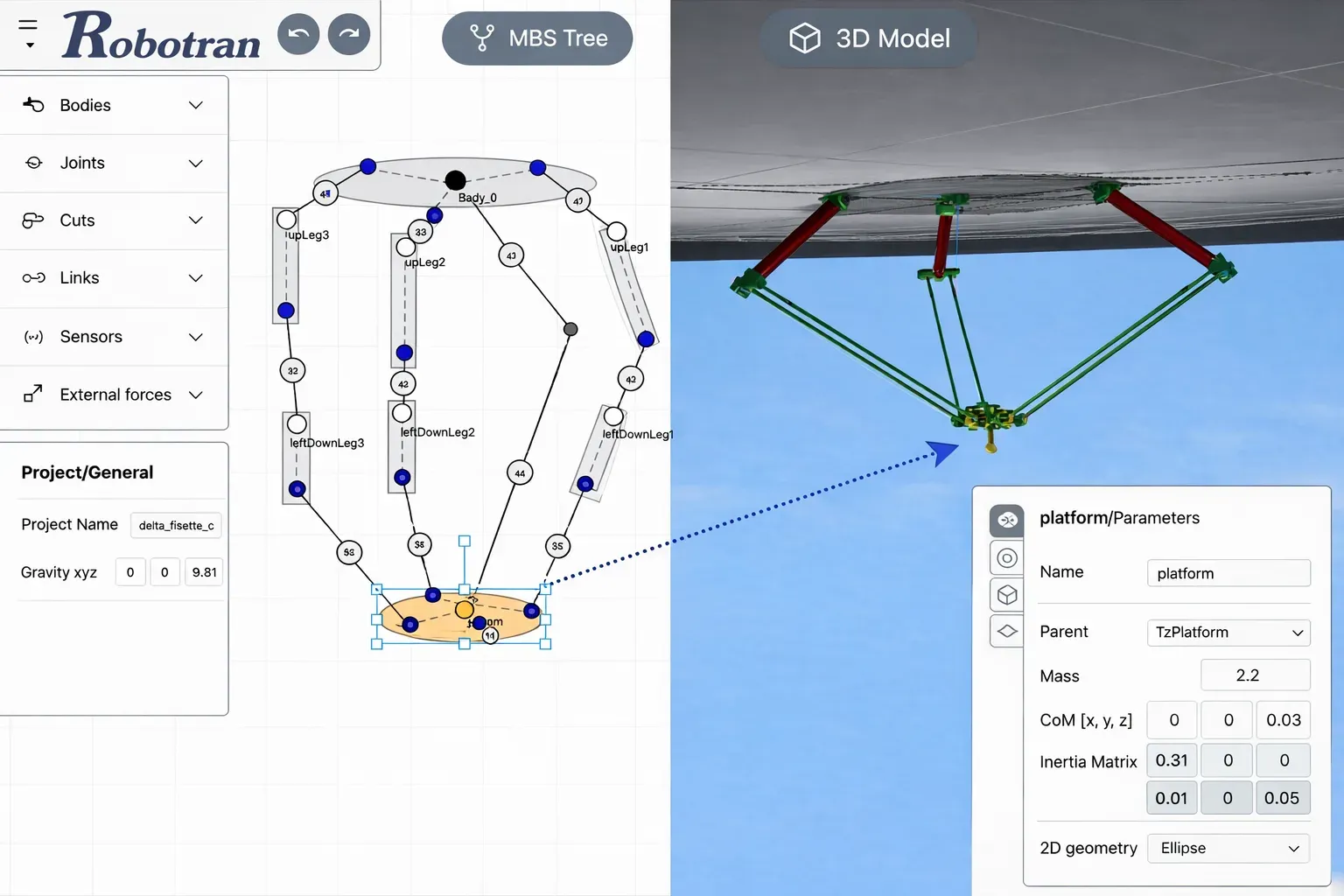
To develop and simulate our multibody models, we rely on Robotran software, a computing environment dedicated to the analysis and simulation of complex mechanical systems, developed by UCLouvain. Stemming from several decades of research in mechanical systems dynamics, it is now used for demanding industrial applications.
Robotran generates motion equations in symbolic form—as if they were written and simplified by hand using alphanumeric characters—and then solves them using numerical methods tailored to the problem's needs. It can handle complex systems comprising up to several hundred interconnected bodies and degrees of freedom, faithfully representing and finely analyzing their dynamic behavior.
At Quandyga, we integrate and adapt this tool to each project to develop robust, turnkey, and directly actionable digital twins within your R&D processes.